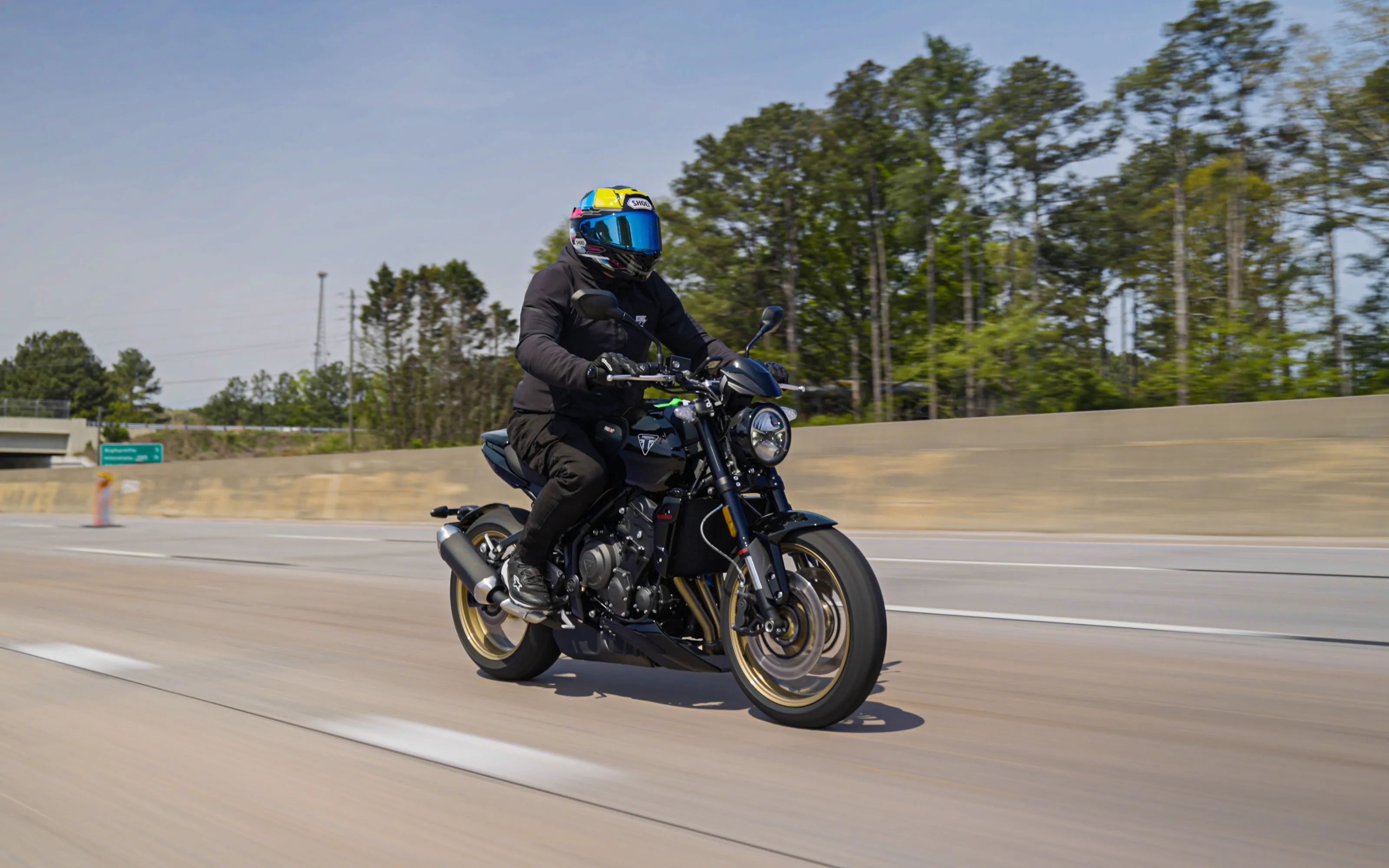
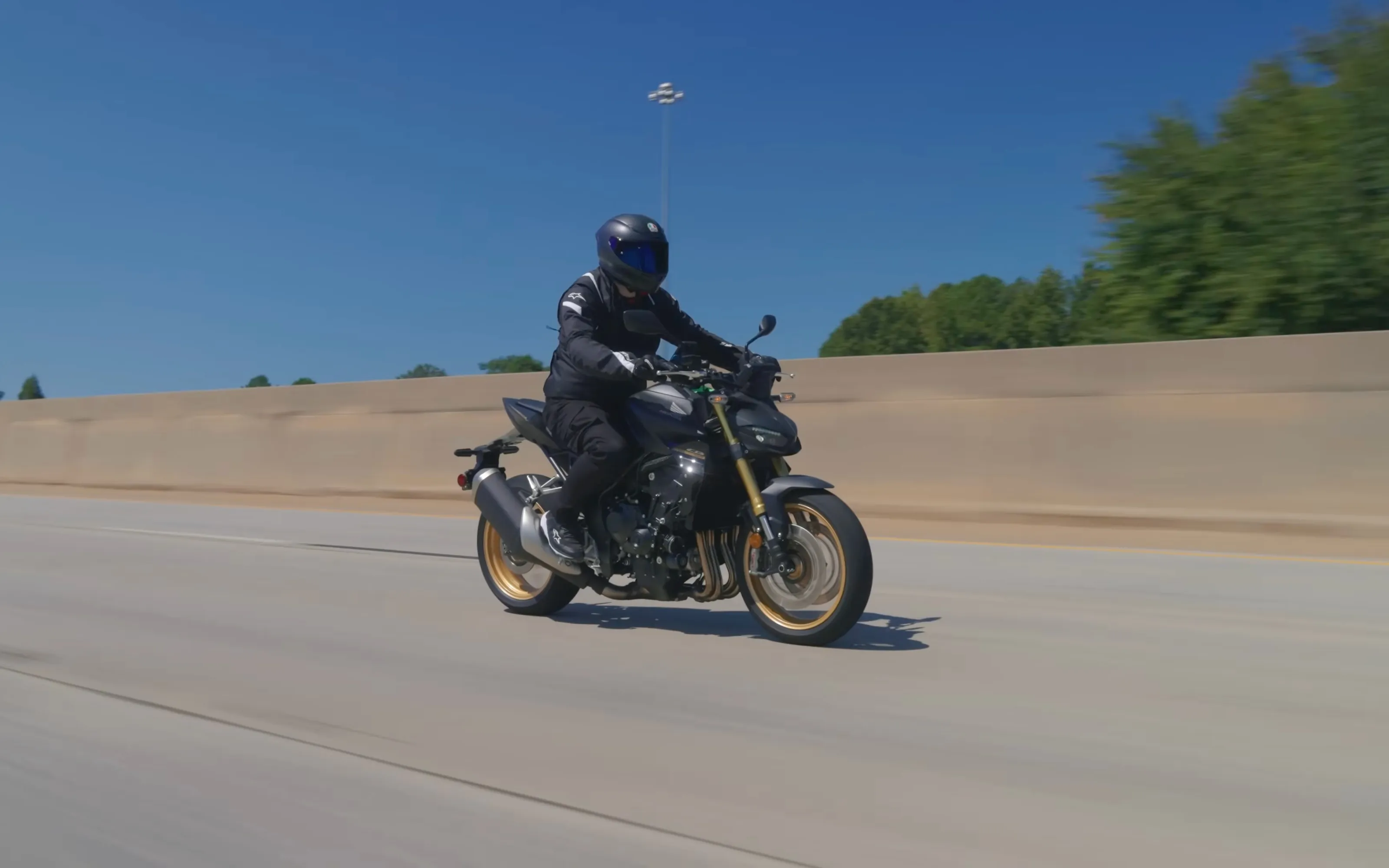
2025 Honda CB1000 Hornet SP
A CBR1000 hiding inside a naked-bike costume. The inline-four motor is the whole point, and also the whole catch.
The Good
- Inline-four naked for under $11k. Undercuts the Z900 and MT-09 SP on spec-per-dollar
- Genuinely a CBR1000 hiding inside a handlebar. The power and chassis are big-bike caliber
- Wheel-up-in-first, wheel-up-in-second 40-80 pull. This is a quick bike when you commit to revving it
The Bad
- On-off abrupt throttle hit in Sport mode that Chase wouldn't want mid-corner
- No IMU, no cruise control. Gap vs. premium nakeds in the same price bracket
- Inline-four needs revs to wake up, if you prefer twin punch down low, this will feel asleep
The CBR1000 They Didn't Want You To Notice
The middleweight-plus naked class is parallel-twin country. MT-09. Z900. Street Triple 765. Even the Speed Triple 1200 is a triple. Honda's answer for 2025 is the CB1000 Hornet SP. A 998cc inline-four naked at $10,999 that the rest of the class is pretending doesn't exist, because they can't price-match it.
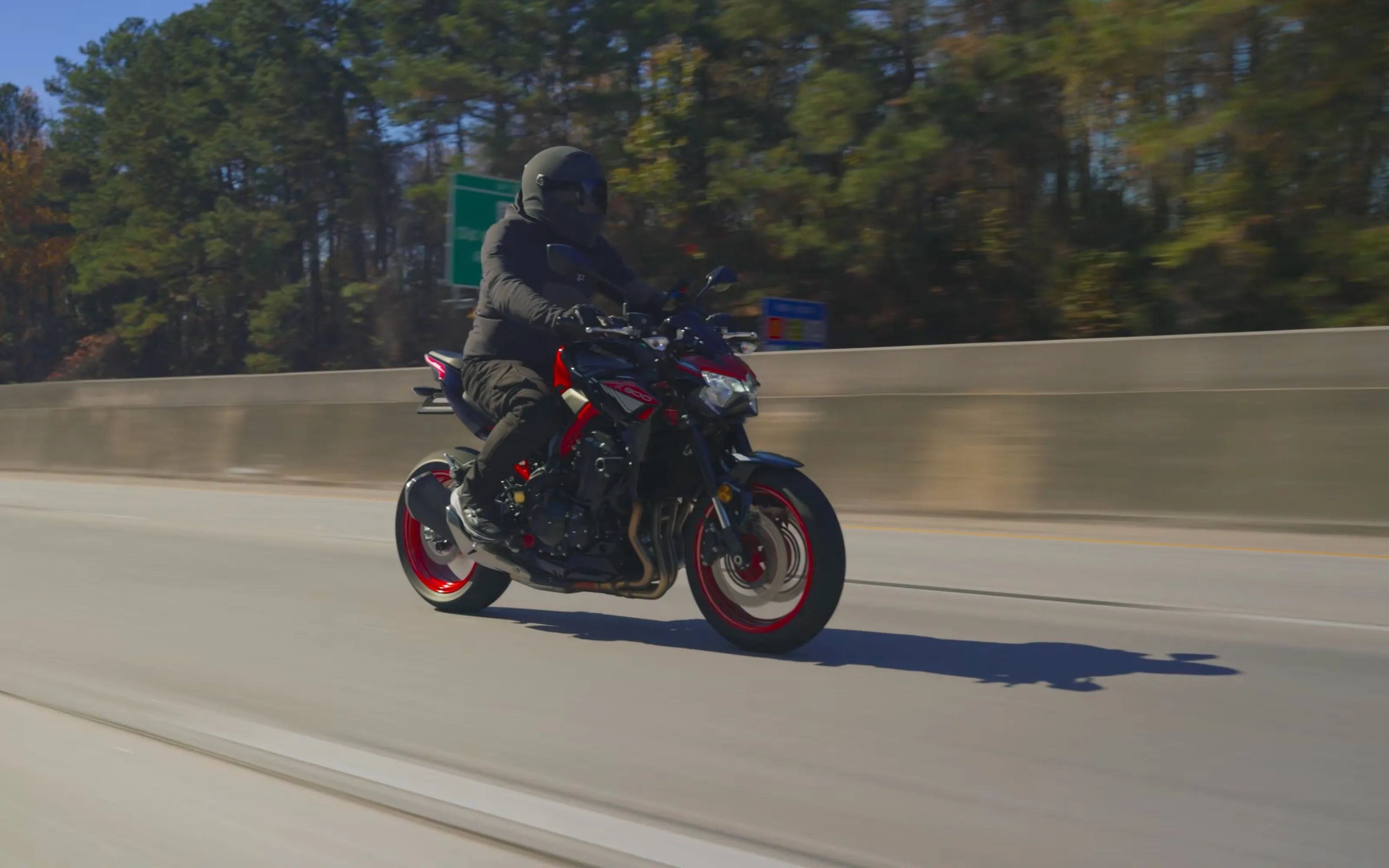
Chase's line from the canyon, once he'd figured out how to ride it: "Honda tried to hide a CBR1000 in a naked bike, and that's what we have right here." That is both the compliment and the warning. The motor wants revs. The chassis wants commitment. The throttle in sport wants a careful wrist. Done right, this is the most bike you can buy new for $11k. Done wrong, or on rain-soaked asphalt, it'll scare you.
Performance highlights
998cc inline-four, 155 horsepower, 78 lb-ft of torque, 465 lb wet, 5.4-gallon tank. Throttle response scores 5 and it's the single lowest number on the Hornet SP's card. The problem isn't throughput. It's calibration. "The power skips 0 to 10%. When you go from off throttle to on, you skip straight to 10% and it just kind of upsets the whole situation." In rain mode it smooths out. In sport mode it's a hair-trigger Chase explicitly said he wouldn't want to grab mid-corner. That's a software fix Honda could make; until they do, it's the bike's character flaw.
Acceleration earns 8 and is the selling point. "Wheels coming up. There's. Jesus. That was a quick one, boys." Wheelie in first, wheelie again on the shift to second. The inline-four lives up high, so the SP wants you to rev it and hold the gear longer than a twin-rider's muscle memory suggests. Do both and the bike is genuinely fast.
Agility is 7. "Tips in easily and feels pretty planted once leaned over." Big-piston fully-adjustable Showa front, fully-adjustable rear. The suspension is firm, Chase called out every pavement joint on city streets, but that firmness is the whole setup choice; get the Hornet SP on a twisty road and the stiff chassis is what makes it work.
Brakes rate 6. Brembos with strong initial bite, but the bite fades under prolonged braking because Honda didn't spec steel-braided lines. Chase's colleague Joe Jackson flagged the same thing at the press launch, "They've got Brembos and a good initial bite, but then you lose a lot of the feeling." A $150 line kit turns this into an easy 8.
Suspension is 8. Showa big-piston fork, fully-adjustable rear. Stiff and sport-tuned. Chase's track-day read: "This motorcycle just acts like it's a Super Sport hidden in a naked bike platform is all this thing feels like." If you want plush, pick the base Hornet. The SP is explicitly sport-focused.
Closer Look
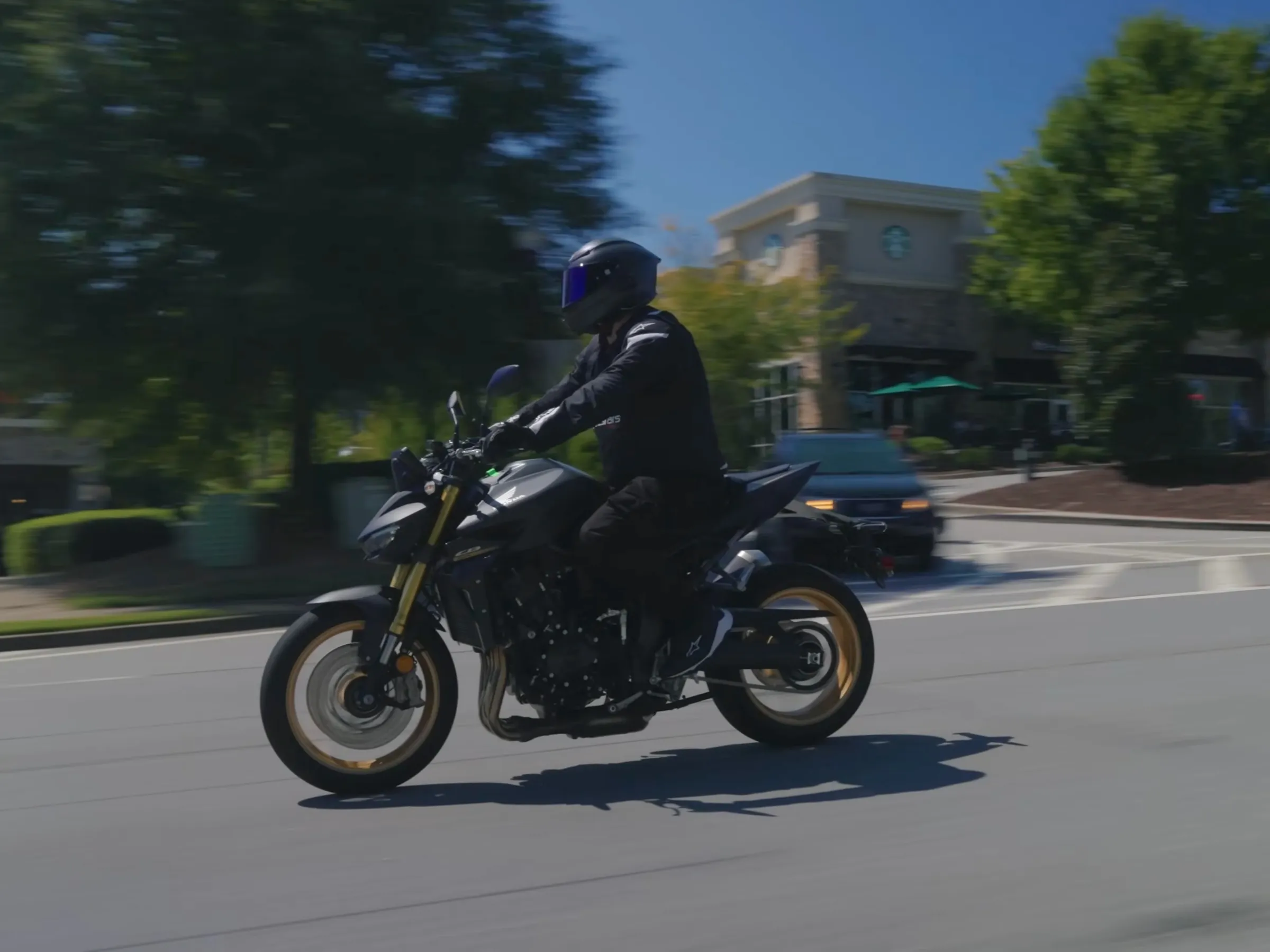
Swipe to explore.
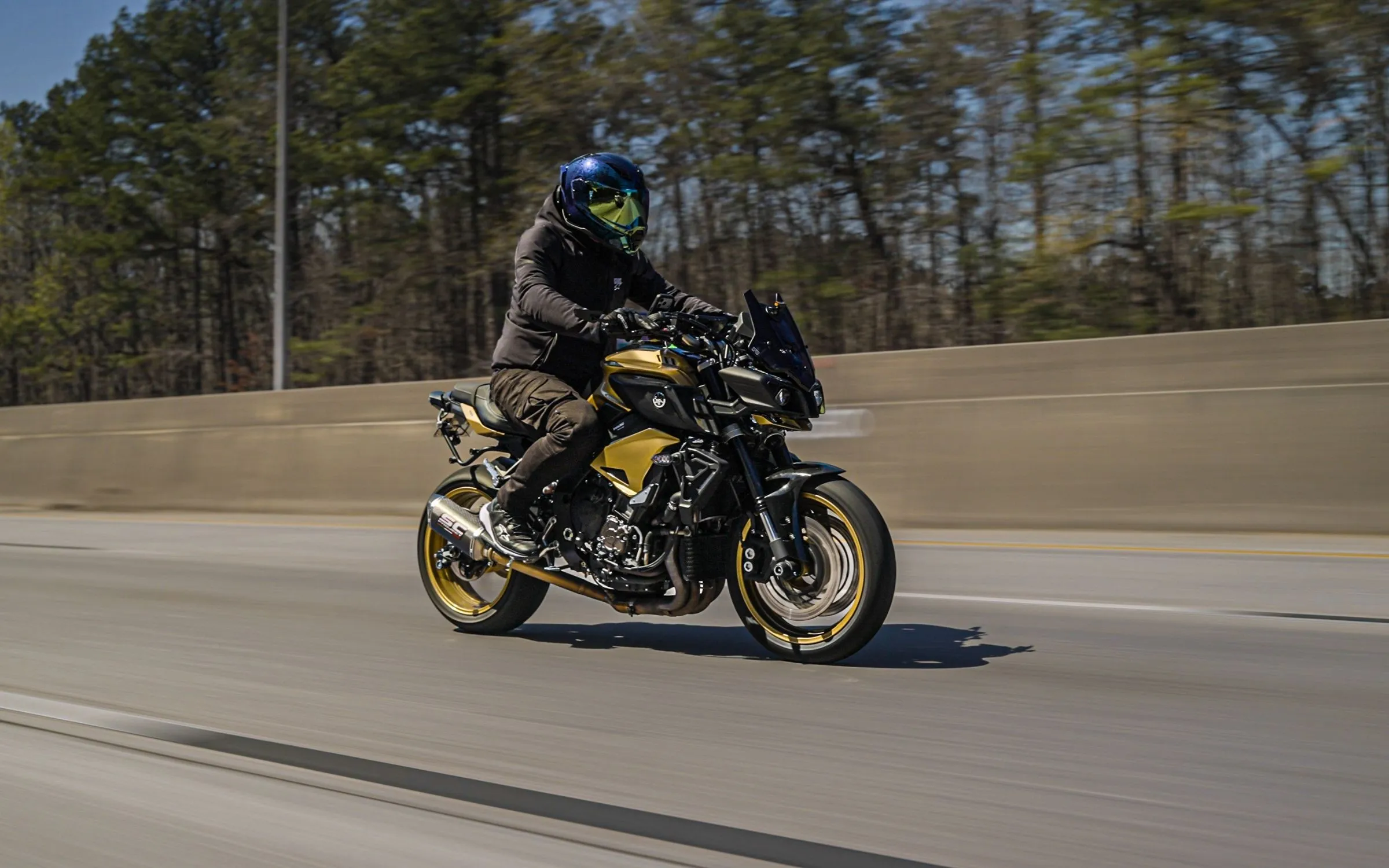
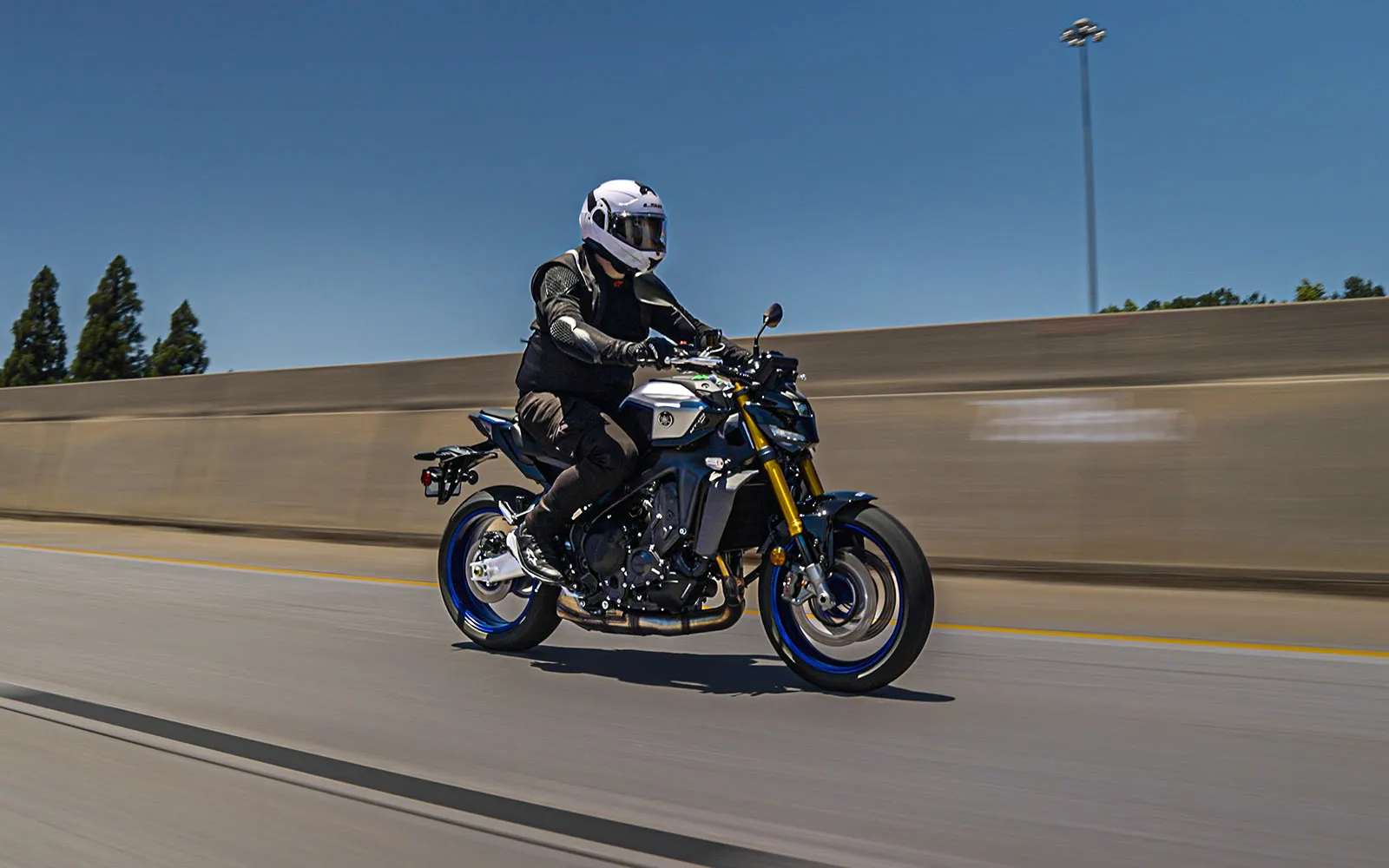
Honda tried to hide a CBR1000 in a naked bike, and that's what we have right here.
Rider experience & tech
Comfort is 6. The seat is tapered, which means a 5'10" / 32" inseam rider lands flat-footed (good news for shorter riders considering an inline-four naked). The body position is a nice middle ground. Knees bent but not super-sport tucked, slight forward lean, bars reasonably close. The seat is firm, the suspension firmer, and the fact that there's no fairing means the wind hits your abs at 80+. Highway is survivable but won't win comparison tests against a fully-faired alternative.
Tech scores 6 and this is where the CB1000 starts revealing where Honda cut costs. No IMU, which means no cornering ABS and no lean-sensitive traction control. No cruise control. That's a genuinely strange omission on a $10,999 middleweight in 2025. You do get the new 5-inch TFT dash and the simplified D-pad control scheme (same as the CB750 Hornet), which Chase has called "engineer-designed" rather than pretty, but functionally easy to navigate. Up-and-down quickshifter feels great. Three rider modes (Rain, Standard, Sport) plus two user slots.
Ease of use is 6. Physically, the bike is approachable: low narrow seat, simple rider triangle, predictable clutch. The issue is the Sport-mode throttle hit, which Chase explicitly pushed toward "more experienced rider" as his recommendation. "I have a feeling this bike's going to make you itch to want more than that. And that's going to lead you to probably put it in modes that you don't have any business being in." For a new rider, Rain-mode works, but Honda should've given the Standard-mode throttle a cleaner tip-in.
Versatility is 6. City: fine if you're patient with inline-four power manners. Canyon: excellent once you commit to high revs. Highway: surprisingly quiet, comfortable, and vibration-free ("this thing would rival the comfort of a touring bike"). But missing the cruise control that would actually let you tour. Track: genuinely capable. Commuter: yes if rain-mode is your default.
Fun-for-the-money is the 8 that saves the score. $10,999 for an inline-four naked with adjustable Showa front, fully-adjustable rear, Brembo brakes, an up-down quickshifter, and a legit CBR1000-derived motor is a genuine value proposition. Nothing else in the segment offers inline-four power for this money.
The Chase Score & final thoughts
With a Chase Score of 66/100, Good Tier, the CB1000 Hornet SP is a case study in "ride score pushed down by a single calibration choice." 34 ride points + 32 usability points = a bike where the raw capability is clearly there, but the throttle mapping and the feature gaps keep it from landing higher.
Buy it if you specifically want inline-four character in a middleweight naked, if you ride aggressively enough to live in the upper rev band, or if you want the cheapest way to get a legit CBR1000-derived powertrain in a handlebar. Skip it if you need cruise control for highway work, if you prefer low-rev twin punch (the CB750 Hornet, its little brother, has more of that character at a lower price), or if you want cornering ABS and an IMU. Chase's close: "I love that this is an option in the market because so many of the higher horsepower naked bikes all have that real punchy power." The Hornet SP isn't trying to be the MT-09. It's trying to be the bike that sport-tourer-background riders migrate to. On that narrow pitch, it works.
The Chase Score Breakdown
Technical Specs
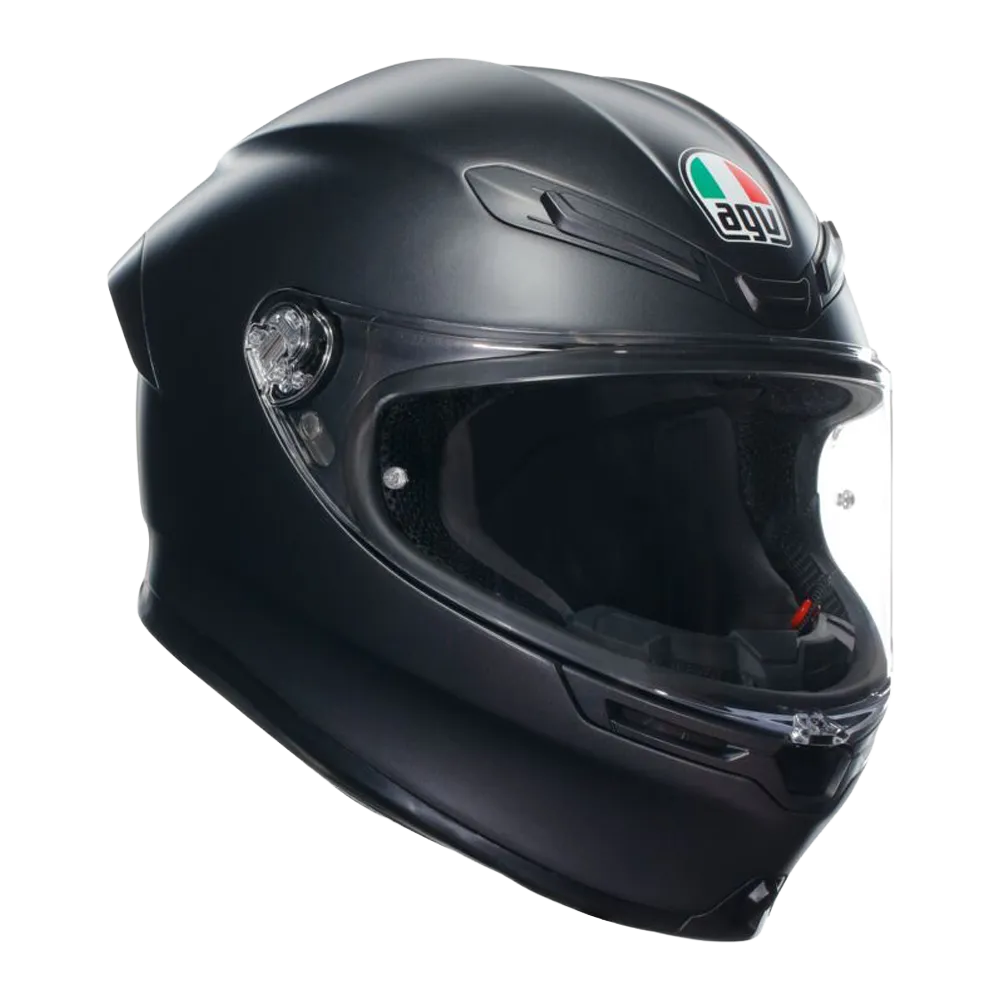
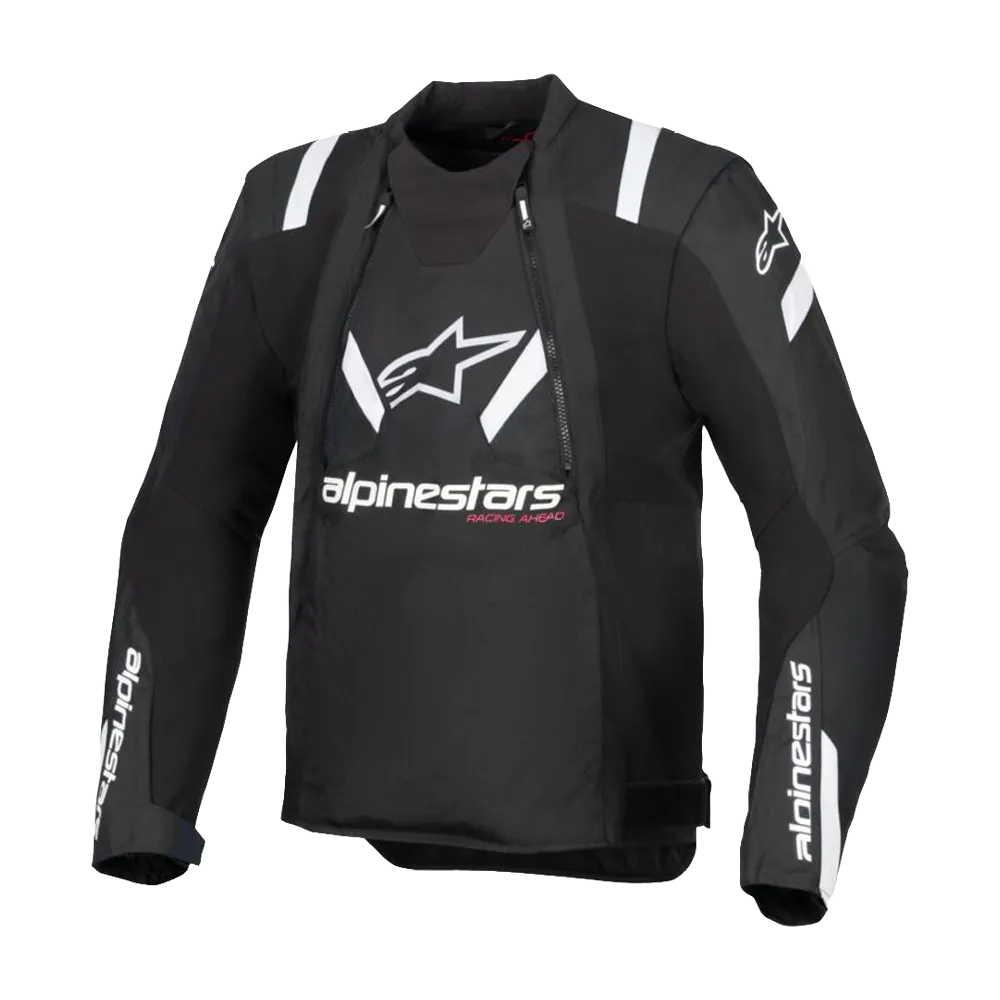
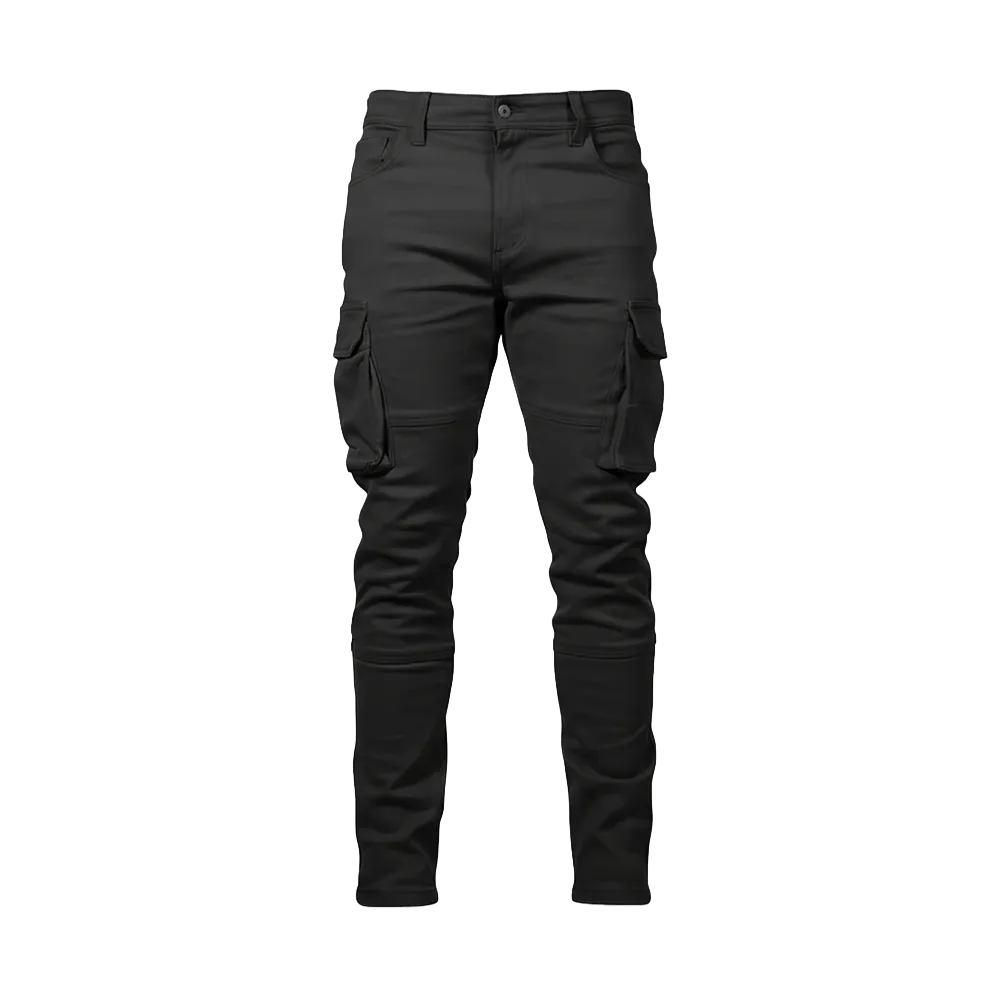
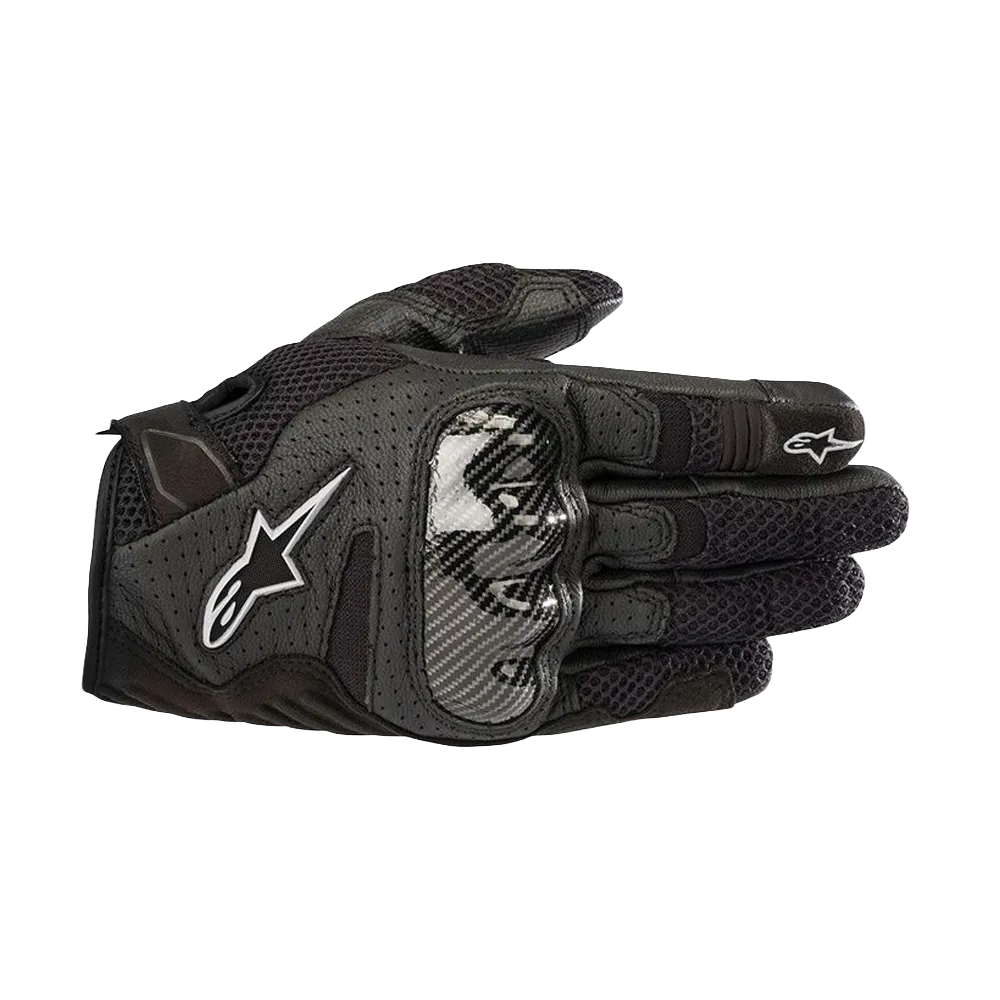
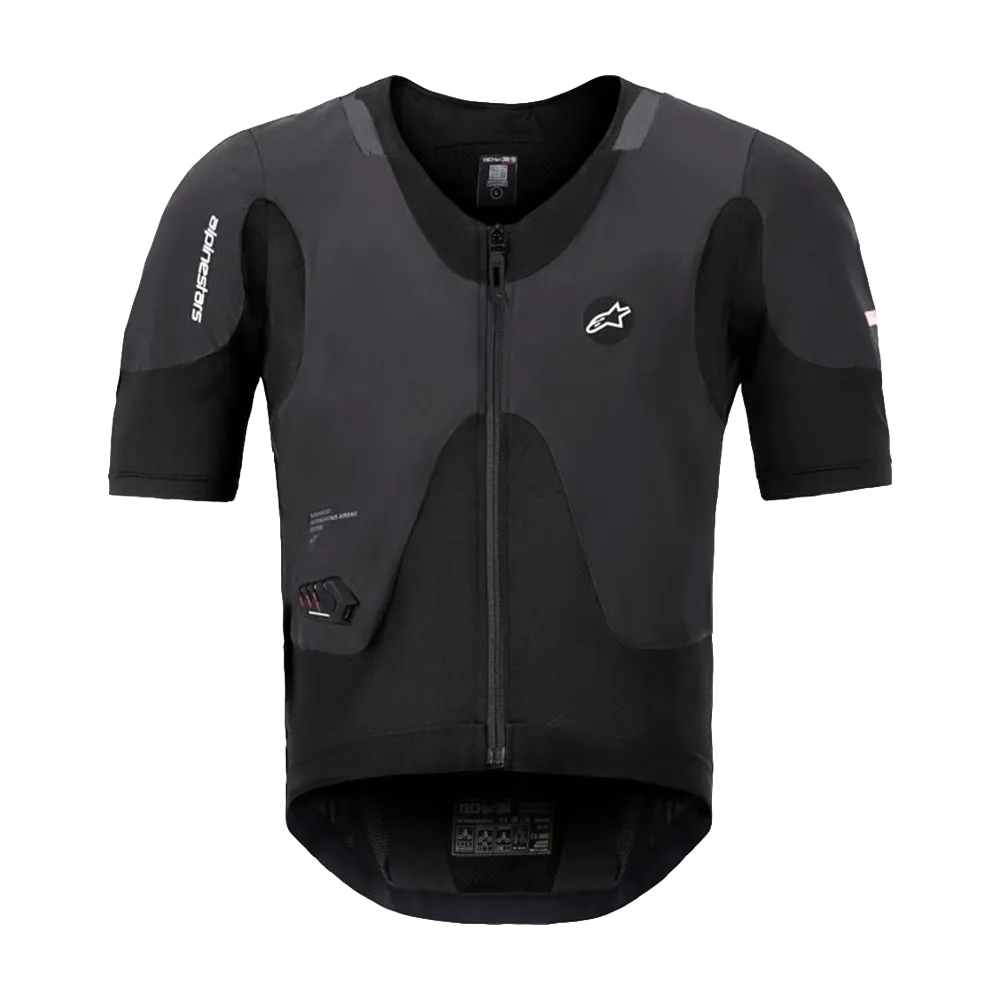
Gear from this ride